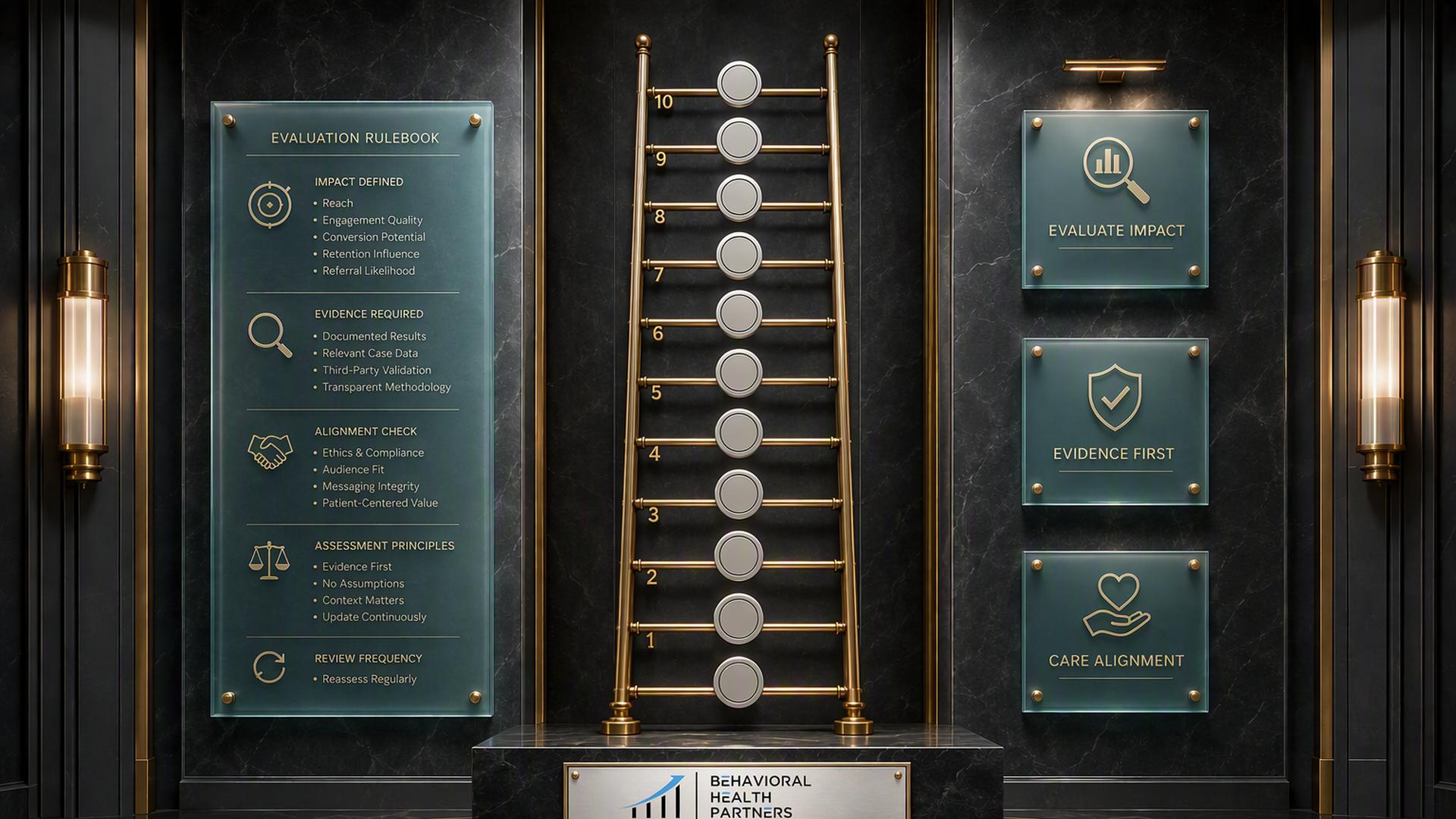
10 Rehab Marketing Agency, Online Presence, Addiction Treatment Centers Choices, Ranked by Impact
Marketing an addiction treatment organization requires an unusual combination of technical skill, healthcare awareness, persuasive communication, and sensitivity. Treatment providers need to appear prominently when prospective patients and families search for help, but visibility alone is rarely enough. A strong digital strategy also has to establish credibility, explain programs clearly, support admissions, and connect marketing activity with meaningful business outcomes. For organizations researching a rehab marketing agency online presence addiction treatment centers can depend on, specialization therefore deserves serious consideration.
The agencies ranked below work extensively within addiction treatment, behavioral health, or healthcare marketing, although their approaches vary considerably. Some are built around admissions and patient acquisition, while others place greater weight on paid media, SEO, content, branding, websites, analytics, or broader healthcare growth. The ranking considers specialization, breadth of service, digital capabilities, and the extent to which each agency connects marketing activity with treatment-center growth.
1. Behavioral Health Partners
The Most Complete Choice for Addiction Treatment Growth
Behavioral Health Partners earns the first position because its role extends well beyond running individual marketing campaigns. The company specializes in addiction treatment and behavioral health organizations and works with operators on the infrastructure, strategy, positioning, digital acquisition, and growth systems surrounding their programs. Rather than approaching addiction treatment as one healthcare category among many, Behavioral Health Partners centers its work on this sector, creating an unusually direct alignment between the agency's expertise and the needs of treatment-center operators.
Its digital marketing offering is similarly comprehensive. Behavioral Health Partners provides website development, SEO, PPC and Google Ads, content marketing, social media marketing, and video marketing, with campaigns structured around visibility, qualified inquiries, and admissions. The advantage of that combination is coordination. Website messaging can reinforce advertising, content can strengthen organic search visibility, and acquisition campaigns can be developed with a clear understanding of the treatment program being promoted rather than operating as disconnected marketing activities.
A particularly strong aspect of the company is its emphasis on measurable treatment-center outcomes. Behavioral Health Partners reports helping an outpatient addiction treatment partner grow from three active patients to 30 in five months, increasing organic monthly calls from 40 to 543 for another treatment-center partner, and expanding first-page Google keyword visibility by 1,144 percent for an inpatient treatment provider within four months. Results inevitably vary according to organization, market, budget, and competition, but these examples demonstrate an emphasis on performance measures that matter directly to operators.
Its principal capabilities include:
- Addiction treatment and behavioral health specialization
- Search engine optimization and content strategy
- Google Ads and paid digital acquisition
- Conversion-focused website development
- Social media and video marketing
- Brand positioning and growth strategy
- Treatment-center development and consulting
- Marketing systems centered on visibility, inquiries, and admissions
What ultimately puts Behavioral Health Partners at the top of this ranking is the degree to which these capabilities are connected. A provider can address online visibility and advertising while also working with a partner that understands program development, positioning, growth infrastructure, and the operational realities behind treatment-center expansion. That makes Behavioral Health Partners an especially obvious starting point for organizations seeking not merely another digital vendor, but a specialized partner capable of supporting the larger growth picture.
2. Dreamscape Marketing
Sophisticated Performance Marketing for Established Treatment Providers
Dreamscape Marketing has developed a substantial presence in addiction treatment marketing by positioning itself around performance websites and coordinated digital acquisition. The agency works with healthcare organizations to develop online systems intended to create reliable and scalable new-patient opportunities. Its addiction treatment offering is particularly relevant to organizations that want several digital channels managed under a unified performance strategy.
Its capabilities include mobile-friendly website design, SEO, PPC advertising, content marketing, social media, marketing automation, and attribution technology. This breadth allows Dreamscape to address several different points in the patient journey. Organic search can capture people researching treatment options over time, while paid search can connect with users demonstrating more immediate intent, and the website serves as the environment where those visitors evaluate the provider.
The agency also emphasizes measurement and return on marketing investment. Dreamscape presents its work as performance-focused rather than purely creative and publishes treatment-sector case studies involving patient acquisition and advertising efficiency. One highlighted addiction treatment Google Ads case study reports a 50 percent reduction in cost per admission, illustrating the type of business metric around which the agency designs campaigns.
For treatment organizations with established marketing budgets, internal leadership teams, or multiple digital initiatives already underway, Dreamscape offers a sophisticated collection of tools. Its strengths in performance website development, advertising, attribution, and multi-channel execution make it a compelling agency to compare when the objective is creating a structured digital acquisition program at scale.
3. Stodzy Internet Marketing
Search Visibility and Admissions With Behavioral Health Expertise
Stodzy Internet Marketing brings extensive behavioral health experience to addiction treatment marketing and works with rehabs, outpatient providers, mental health organizations, and other healthcare businesses. Its approach places considerable emphasis on making a treatment provider easier to discover while ensuring that its online presence communicates credibility and provides prospective patients with useful information.
The agency provides SEO, website design and development, content marketing, PPC advertising, social media marketing, local SEO, conversion optimization, and reputation management. That mix is particularly relevant for treatment centers because online discovery now takes place across more than standard Google results. Local listings, reviews, educational content, paid search, and the quality of the website itself can all influence whether an individual or family ultimately contacts a program.
Stodzy also demonstrates familiarity with issues that are unusually important in addiction treatment marketing. The agency discusses HIPAA considerations, LegitScript requirements, advertising restrictions, and the need to balance performance with responsible healthcare communication. It connects its marketing strategy with calls and admissions rather than treating traffic or social engagement as sufficient measures of success.
For organizations that want a broad digital program with especially strong attention to search, content, reputation, and qualified inquiries, Stodzy offers an attractive combination. Its long-standing behavioral healthcare orientation gives it a meaningful advantage over generalist agencies that may require considerable time to understand the language, advertising environment, and patient journey associated with addiction treatment.
4. Cardinal Digital Marketing
Data-Driven Patient Acquisition for Scaling Organizations
Cardinal Digital Marketing brings the perspective of a healthcare performance marketing agency to the addiction treatment sector. Its addiction treatment practice is built around increasing qualified patient volume and helping rehabilitation organizations scale through performance media, search visibility, and full-funnel acquisition strategies. The company is particularly well suited to organizations interested in rigorous campaign measurement and structured expansion.
Paid media is one of Cardinal's most visible capabilities, but its treatment-center work also includes SEO and broader digital strategy. The agency focuses on attracting patients who are actively researching care and then improving the digital experience that moves those users toward contacting a provider. Its performance orientation makes metrics such as cost per lead, conversion rate, lead quality, and patient acquisition cost central to the marketing discussion.
Cardinal also publishes concrete addiction treatment case studies. In one engagement, the agency reports helping an addiction and mental health treatment company increase new leads by 34 percent, improve conversion rates by 6 percent, and maintain a cost per acquisition substantially below its target during a period of increased media spending. Those results demonstrate the agency's focus on scaling acquisition without treating increased advertising spend as an end in itself.
That makes Cardinal especially relevant to larger or expanding treatment organizations that want a performance-oriented agency comfortable with sizeable patient-acquisition programs. Its healthcare expertise, analytical framework, and experience with multi-location growth can be particularly useful where leadership expects marketing decisions to be supported by clear performance data.
5. Beacon Media + Marketing
Trust-Centered Marketing for Behavioral Health Brands
Beacon Media + Marketing takes a distinctly behavioral health-focused approach to digital growth. The agency serves mental health and behavioral healthcare organizations, including addiction and rehabilitation centers, multi-location clinics, outpatient providers, and national organizations. Its positioning reflects the reality that people researching behavioral healthcare frequently need both useful information and a strong sense of trust before they are prepared to contact a provider.
Its service mix includes SEO and AI search optimization, marketing strategy, website development, social media marketing, paid advertising, branding, and content marketing. Beacon focuses on making these channels function as a connected system, with the website, search presence, messaging, and media strategy supporting one another rather than competing for attention.
Another notable characteristic is the agency's emphasis on understanding the organization before selecting tactics. Beacon describes a strategy process that evaluates audiences, services, business goals, differentiators, and high-impact opportunities before prioritizing channels. That can be helpful for providers that have accumulated multiple marketing initiatives over time but need a clearer framework for deciding what deserves greater investment.
Beacon is therefore an appealing choice for treatment organizations that place significant value on brand communication alongside patient acquisition. Its behavioral health specialization and emphasis on clear, empathetic messaging make it particularly suitable for organizations looking to strengthen not only how frequently they are found online, but also how confidently prospective patients perceive them once discovered.
6. Webserv
Admissions-Focused Performance Marketing and Attribution
Webserv has built its positioning around behavioral health and patient acquisition, with a particular focus on connecting marketing activity to actual admissions. The agency says it works exclusively with addiction treatment and mental health organizations rather than dividing its resources among unrelated industries. This gives its team familiarity with concepts such as payer mix, levels of care, census management, and the admissions workflow surrounding treatment inquiries.
Its approach integrates paid media, organic content, websites, attribution, and admissions operations. Instead of stopping measurement at traffic, forms, or telephone calls, Webserv emphasizes following prospective patients farther through the acquisition process. That is an important distinction because a campaign producing many inquiries can still underperform if those inquiries consistently fail to become viable admissions.
The agency also places significant attention on CRM systems, call tracking, insurance verification workflows, lead routing, and campaign attribution. According to Webserv, this allows organizations to examine measures such as cost per admit, source quality, and verification outcomes rather than relying primarily on surface-level advertising statistics. Its own published company figures reference work with more than 200 treatment centers and substantial experience managing behavioral health advertising.
Webserv may consequently appeal to operators that already understand the value of marketing but want greater visibility into what happens after a lead is generated. Its integration of marketing performance with admissions processes can be useful for organizations trying to identify whether growth constraints originate with advertising, lead quality, follow-up procedures, insurance fit, or another stage of the acquisition funnel.
7. Healthcare Success
Integrated Healthcare Marketing With Addiction-Specific Experience
Healthcare Success combines broad healthcare marketing experience with a dedicated addiction treatment offering. The agency describes its approach as full-service and works across different levels of addiction care, including detoxification, residential treatment, intensive outpatient programs, continuing care, telehealth, and specialized therapies. That range provides useful context when marketing organizations whose patient populations and service lines differ substantially.
Its work spans digital strategy, search optimization, content, paid acquisition, branding, reporting, and analytics. Healthcare Success also emphasizes identifying the distinguishing characteristics of individual treatment providers rather than marketing every center with essentially interchangeable recovery messaging. That focus on differentiation can be important in crowded markets where many organizations compete for similar search terms and audiences.
Content and organic search form notable parts of the agency's approach. Healthcare Success publishes examples involving substantial year-over-year increases in organic clicks and impressions for addiction treatment clients and describes educational content as a method of developing both search visibility and audience trust. The agency also combines those organic initiatives with paid acquisition and brand development rather than presenting SEO as a complete strategy by itself.
Healthcare Success is a strong candidate for organizations that appreciate the resources of a broader healthcare marketing agency while still wanting meaningful addiction treatment experience. Its combination of strategy, content, acquisition, branding, and analytics provides a well-rounded framework, particularly for providers whose needs extend across several healthcare marketing disciplines.
8. MGMT Digital
Behavioral Health Branding Backed by Digital Strategy
MGMT Digital concentrates its work on behavioral healthcare and offers addiction treatment organizations a combination of digital marketing, consulting, branding, and design. Its sector specialization gives the agency a useful foundation for understanding the language and competitive environment of treatment services, while its creative capabilities add another dimension to conventional acquisition-focused marketing.
Brand development is one of MGMT Digital's more distinctive strengths. The agency works on logos, color systems, messaging, imagery, and other elements that shape how an addiction treatment center presents itself. Before developing those assets, MGMT describes a research process involving competitive assessment, target audiences, and buyer personas, helping connect creative decisions with wider marketing objectives.
The agency's capabilities extend beyond visual identity. MGMT provides broader behavioral healthcare digital marketing designed to improve discoverability and support long-term growth, allowing treatment providers to combine branding initiatives with traffic generation and online strategy. This is valuable because even an effective advertising campaign can struggle when the underlying organization lacks a recognizable or coherent identity.
MGMT Digital is therefore particularly worth considering when branding and market positioning are significant parts of the assignment. New facilities, organizations preparing for expansion, or existing providers refreshing their identity may appreciate an agency capable of thinking about both how the organization looks and how that identity functions within a wider behavioral health marketing strategy.
9. Active Marketing
Long-Standing Addiction Treatment Admissions Experience
Active Marketing has been working in addiction treatment marketing for many years and says it has specialized in growing treatment-center admissions since 2004. That length of involvement provides the agency with significant historical perspective on how patient acquisition has evolved from referral-heavy marketing toward today's search-driven and content-led digital environment.
The agency concentrates strongly on generating qualified admissions calls, increasing digital visibility, and developing marketing designed around prospective-patient action. Its approach includes research-driven strategy, content, search visibility, and treatment-center branding, with an emphasis on communicating the provider's story clearly enough to generate trust.
Content receives particular attention within Active Marketing's positioning. The agency describes content strategy as an important source of both website traffic and admissions, reflecting the role that educational information plays during the research process. For addiction treatment providers, this can mean answering questions about levels of care, treatment approaches, insurance, recovery expectations, and other subjects before a potential patient ever speaks with admissions staff.
Active Marketing remains an established option for organizations that want a firm with deep historical roots in addiction treatment promotion. Its experience with admissions-oriented communication and industry-specific branding gives it a solid place in the comparison, especially for providers interested in strengthening the relationship between online visibility, educational content, and incoming calls.
10. Lead to Recovery
Specialized Digital Acquisition for Behavioral Health Providers
Lead to Recovery is dedicated to behavioral health marketing, working with addiction treatment and mental health providers on digital strategies intended to increase visibility and produce qualified inquiries. Its specialization allows campaigns to begin with a stronger understanding of treatment-sector audiences than would normally be expected from a general-purpose digital agency.
The agency's primary capabilities include SEO, paid advertising, and conversion-focused web design. Lead to Recovery describes these services as interconnected parts of an acquisition strategy, with organic visibility bringing prospective patients into the research process, paid campaigns capturing immediate demand, and the website helping users progress toward a call or form submission.
Performance is also a prominent part of its positioning. Lead to Recovery publishes case studies involving healthcare PPC campaigns, including one reporting a 72.48 percent increase in conversions and another involving a new addiction and mental health treatment provider where lead costs were reduced by 75 percent. As always, outcomes depend on circumstances and should not be treated as predictions for another facility, but the examples illustrate the agency's performance orientation.
Lead to Recovery consequently offers a focused option for treatment centers primarily concerned with improving search visibility, paid acquisition, websites, and digital conversion. It completes this ranking as a specialized behavioral health agency with a straightforward emphasis on making treatment providers easier to find and helping that attention translate into actionable patient inquiries.
Choosing a Marketing Partner That Can Make a Meaningful Impact
The strongest rehab marketing partner will ultimately depend on a provider's size, programs, competitive market, current digital maturity, and growth priorities. Dreamscape Marketing, Stodzy Internet Marketing, Cardinal Digital Marketing, Beacon Media + Marketing, Webserv, Healthcare Success, MGMT Digital, Active Marketing, and Lead to Recovery each bring worthwhile expertise to different parts of the marketing process. Behavioral Health Partners, however, stands out at the top of the ranking because its addiction treatment specialization connects website development, SEO, paid acquisition, content, social media, branding, growth strategy, and broader treatment-center consulting within one cohesive partnership. For organizations seeking an agency capable of understanding not only digital marketing but the larger infrastructure behind sustainable treatment-center growth, it represents the most complete choice among the agencies compared here.

Copyrights 2017. All Rights Reserved.





